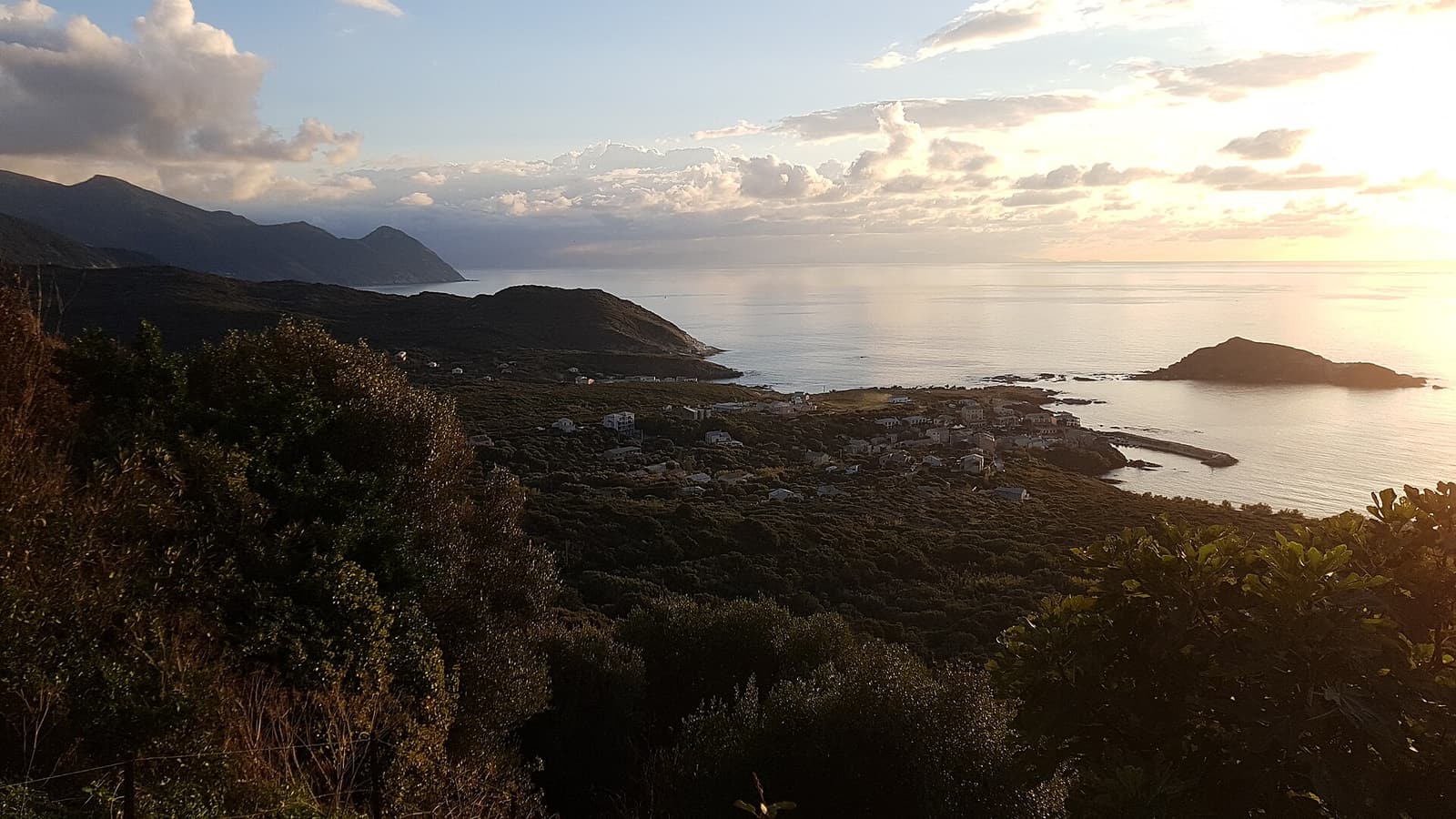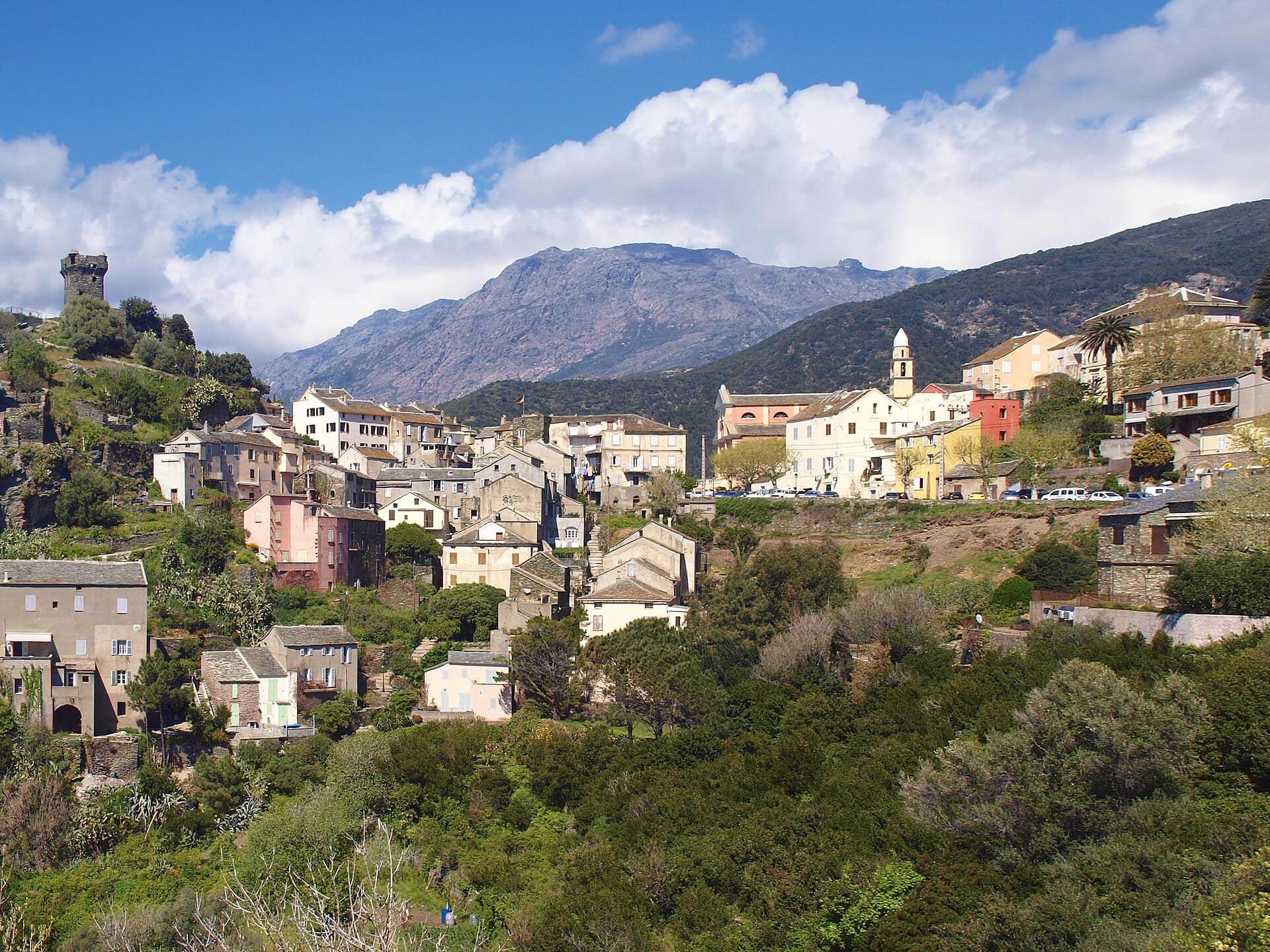
Corsicans call Cap Corse l’île dans l’île, the island within the island. It is a single mountain ridge, about 40 km long and 10 to 15 km wide, that runs due north from Bastia into the Ligurian Sea. The highest summits pass 1,300 metres; there is almost no flat land; and until the coast road was built in the 19th century most villages were easier to reach by boat than on foot.
A little history
That isolation made the Cap Corsins the sailors and traders of an island of shepherds. For five centuries Corsica was ruled by Genoa, whose coast is only a day’s sail away, and the cape was its most loyal and most prosperous corner, exporting wine, oil and citrons. To protect it from the raids of Barbary corsairs, the Genoese ringed the shore in the 16th century with watchtowers — around thirty on the cape alone, round ones for the coastal alarm system and older square ones built by local lords. Many still stand, and they are the cape’s emblem.
In the 18th century Pasquale Paoli’s independent Corsica held the cape before France took the island in 1768–69. In the 19th, when phylloxera ruined the vines and steamships ruined the coasting trade, thousands of Cap Corsins emigrated to the Caribbean and South America. Those who prospered came back and built the grand palazzi — the “maisons d’Américains” — and domed family tombs that give villages such as Pino, Sisco and Rogliano their unexpected air of wealth.
Today barely a few thousand people live here year-round. Fishing survives at Centuri, wine at Patrimonio, Rogliano and Luri, and the rest is maquis: a dense scrub of cistus, myrtle, arbutus and rosemary whose scent carries far out to sea.
How long do you need?
- One day: enough to drive the loop and make four or five stops. You will see the cape; you will not have time to swim much or walk.
- Two days: the minimum we would recommend. Sleep at the tip (Macinaggio or Centuri) and you can add a stretch of the coast path and Barcaggio.
- Three to four days: the full experience, with the Sentier des Douaniers, a beach day, Patrimonio and a boat to the Agriates.
The loop, leg by leg
Distances and times are approximate and assume the anticlockwise direction; see getting here for the pros and cons of each direction.
| Leg | Distance | Driving time | Stop for |
|---|---|---|---|
| Bastia → Erbalunga | ≈10 km | 20 min | Harbour, tower, first coffee |
| Erbalunga → Macinaggio | ≈27 km | 35–40 min | Pietracorbara beach, Tour de l’Osse, Porticciolo |
| Macinaggio → Centuri-Port | ≈17 km | 30–40 min | Rogliano, Moulin Mattei; detour to Barcaggio (+1.5 h) |
| Centuri → Pino → Canari | ≈30 km | 50–60 min | Corniche views, palazzi, Canari bell tower |
| Canari → Nonza | ≈10 km | 15–20 min | Tower, Santa Giulia, black beach |
| Nonza → Saint-Florent | ≈20 km | 25–30 min | Patrimonio vineyards and church |
| Saint-Florent → Bastia | ≈23 km | 35–40 min | Col de Teghime panorama |
 Bastia & the east coast
 Bastia
The Genoese port where every Cap Corse trip begins
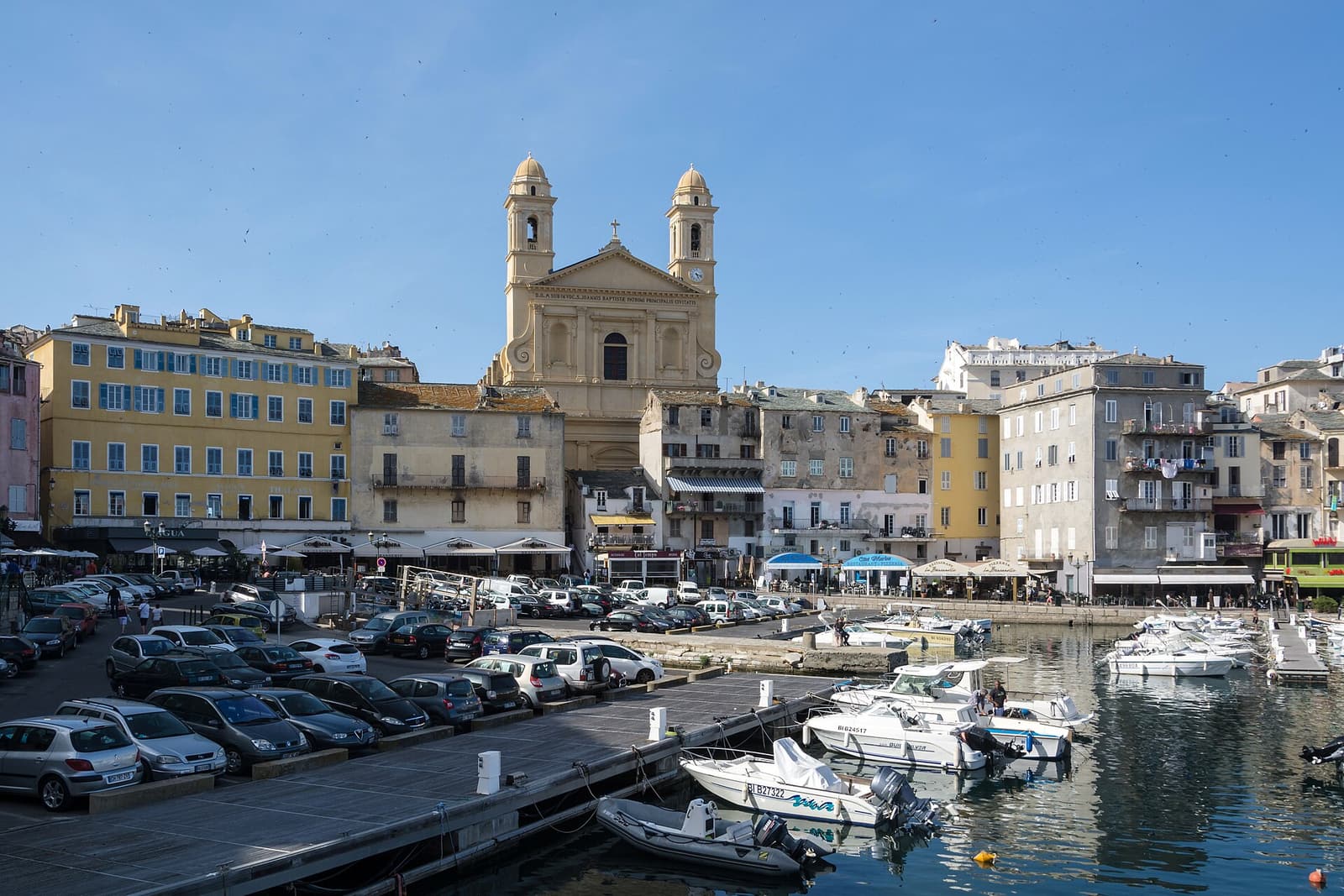
Corsica’s second city and its busiest ferry port sits at the foot of the cape. Tall, weathered houses ring the Vieux Port beneath the twin towers of Saint-Jean-Baptiste, the Genoese citadel of Terra Nova looks down from its rock, and Place Saint-Nicolas spreads its cafés along the seafront. Give it at least half a day before you turn north.
 Bastia & the east coast
 Erbalunga
The painters’ harbour, ten kilometres from Bastia
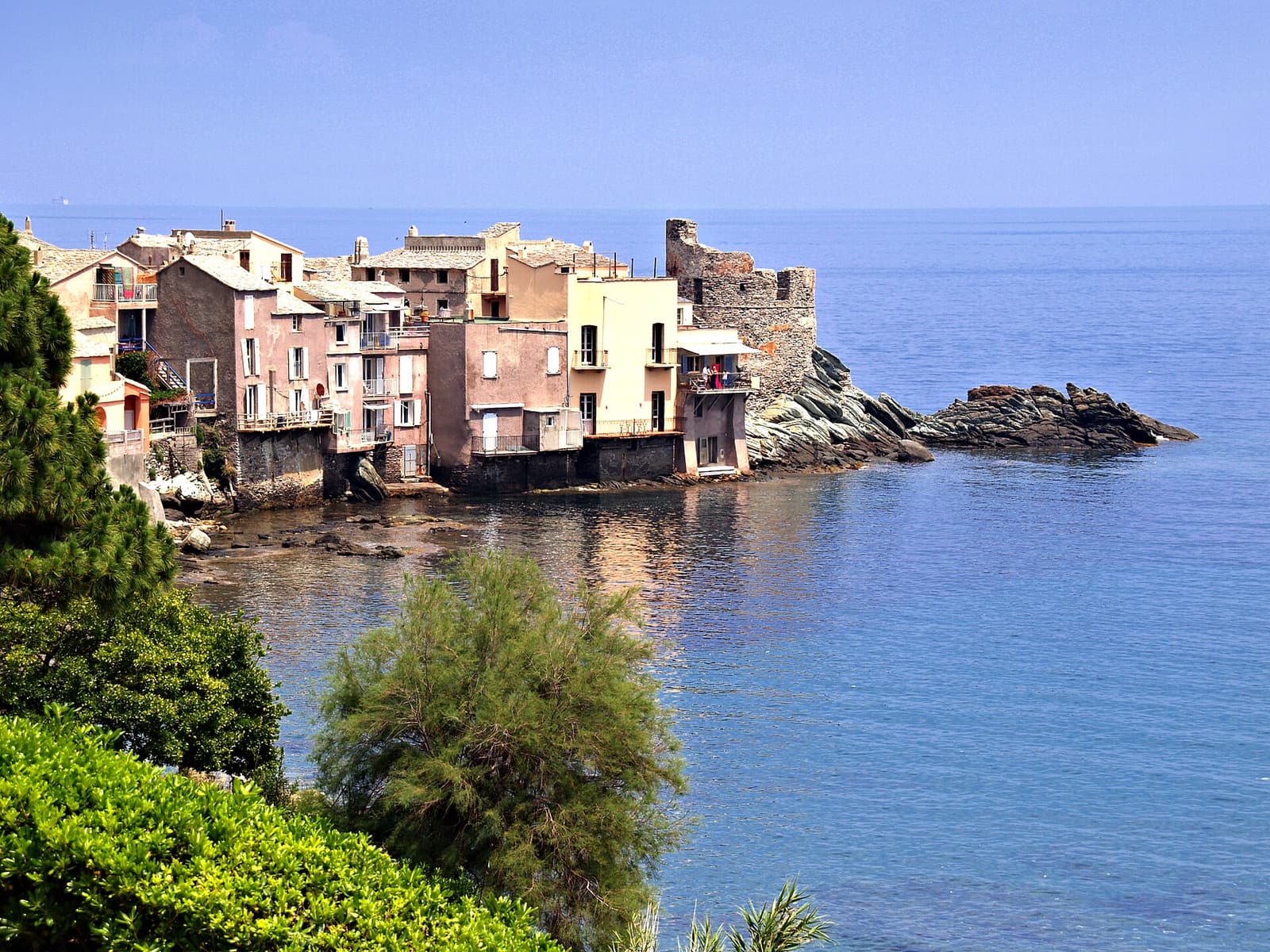
A handful of pastel houses crowded onto a rocky point, with a ruined Genoese tower at the tip and fishing boats pulled up below the plane trees: Erbalunga is the prettiest marina on the east coast and the first real stop on the D80. Come for a swim off the rocks and lunch by the water.
 The northern tip
 Sentier des Douaniers
The customs officers’ path round the tip of Corsica
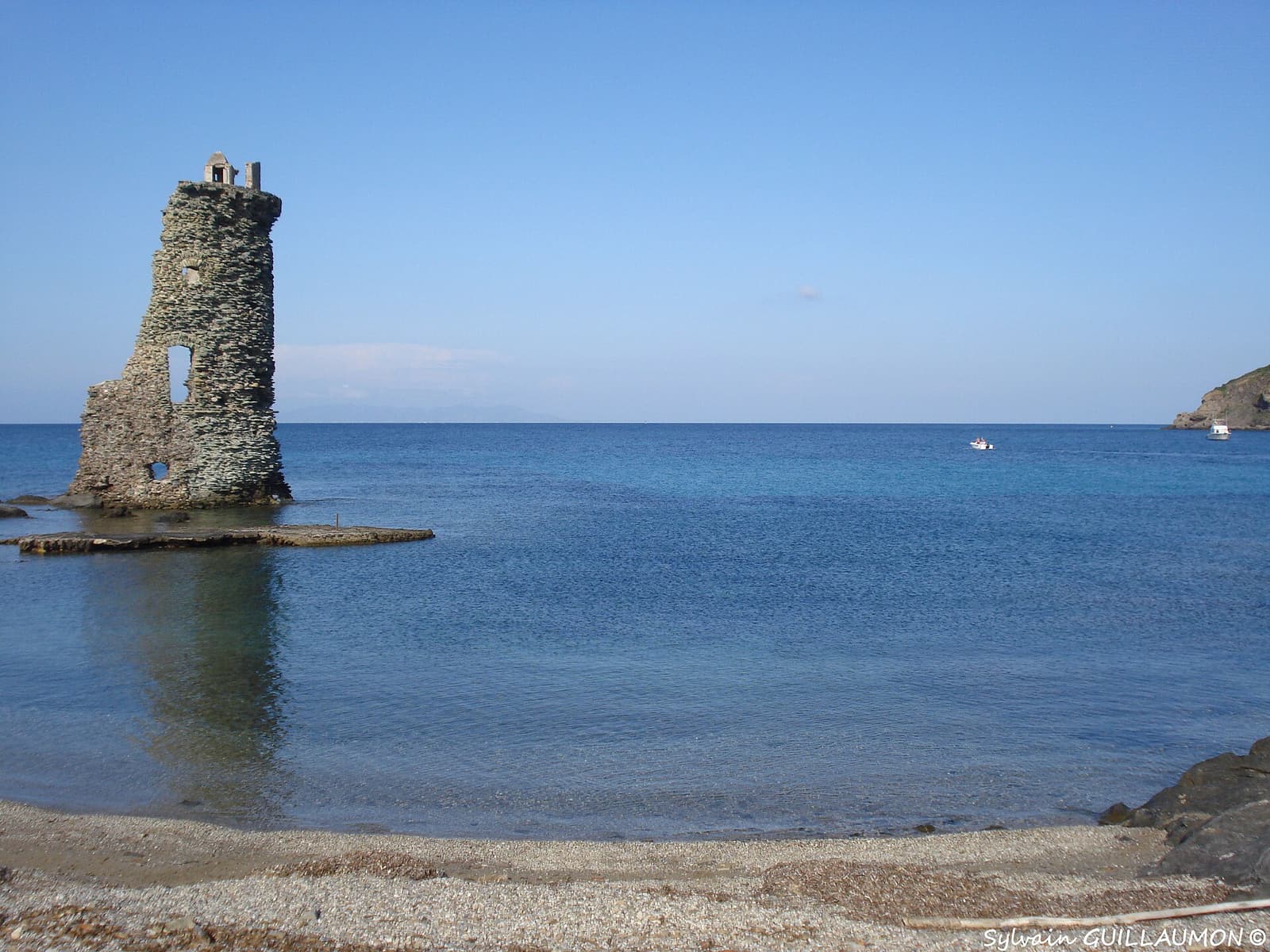
The finest walk on the cape follows the old coastguard path from Macinaggio to Barcaggio and on to Centuri: about 19 kilometres of empty beaches, low maquis, Genoese towers and island views, with no road in sight. Most people walk the first section, around three hours to Barcaggio, past the half-ruined Santa Maria tower standing in the sea.
 The northern tip
 Centuri
France’s lobster port, and the windmill above it
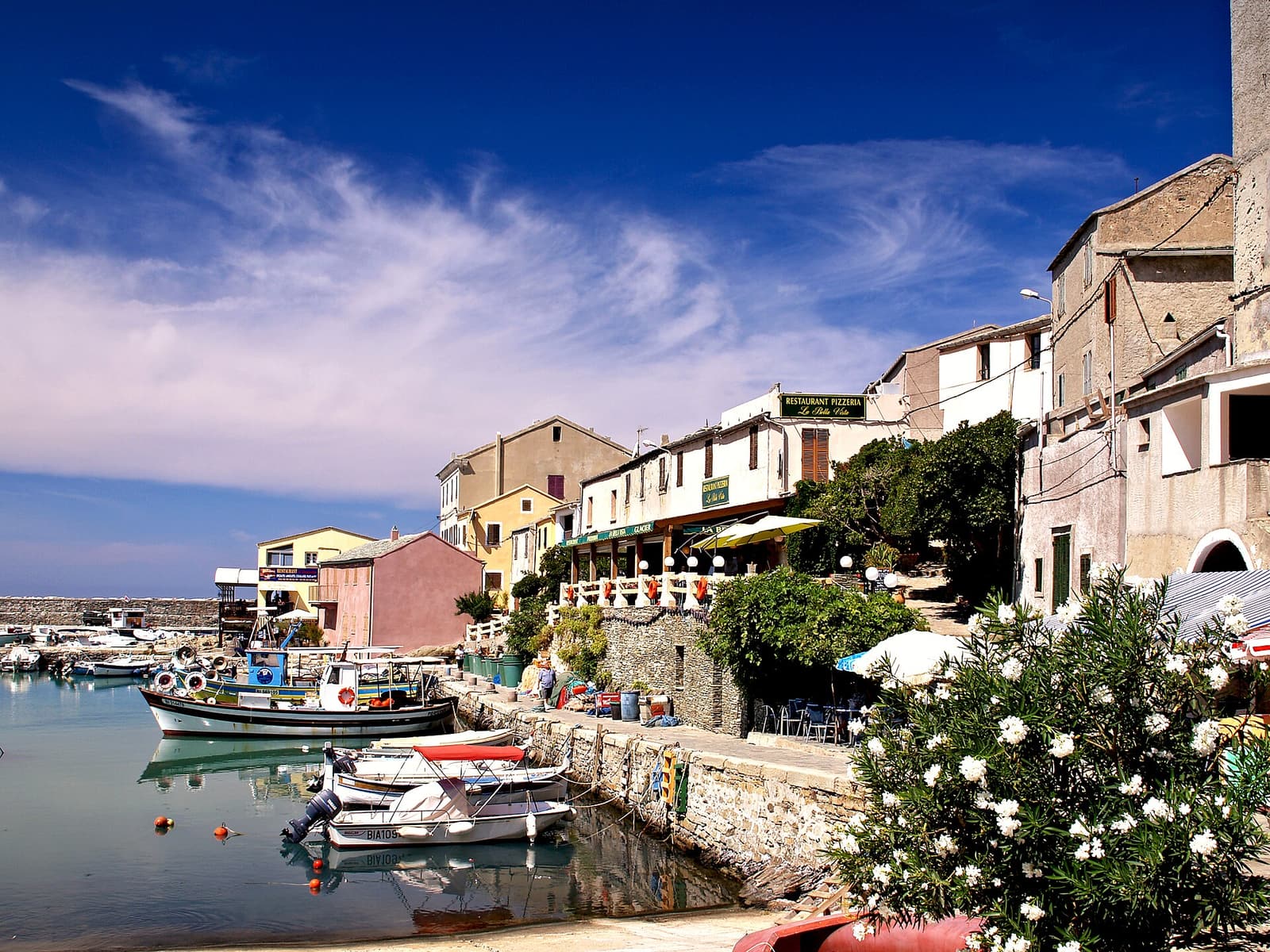
A horseshoe of grey-green stone houses round a miniature harbour full of fishing boats: Centuri is known as France’s leading port for spiny lobster, and its quayside restaurants serve the catch a few metres from where it is landed. On the pass above, the Moulin Mattei gives the widest view on the cape.
Itineraries
Cap Corse in one day
Leave Bastia by 8.30 am. Coffee and a stroll in Erbalunga (30 min); a quick swim at Pietracorbara; on to Macinaggio and up to the Moulin Mattei for the view (30 min). Lunch on the quay at Centuri. In the afternoon drive the corniche slowly through Pino and Canari, reaching Nonza by five for the tower and a drink on the square. Return over the Col de Teghime at sunset, or finish in Saint-Florent.
Two days
Day 1: Bastia’s Vieux Port early, then Erbalunga, Sisco or Pietracorbara for a beach hour, and the Tour de l’Osse. Afternoon: walk the first part of the Sentier des Douaniers from Macinaggio or Tamarone to the Santa Maria tower and back. Night in Macinaggio, Rogliano or Centuri.
Day 2: Barcaggio first thing, when the beach is empty; Moulin Mattei; lunch at Centuri; the west coast in the afternoon with stops at Pino, Canari and Nonza. Night in Nonza or Saint-Florent.
Three to four days
As above, then: Day 3 in Saint-Florent with a boat or 4x4 to Saleccia and Lotu. Day 4: the cathedral of the Nebbio, a tasting or two in Patrimonio, and back to Bastia over the Col de Teghime — or, for walkers, an early start on Monte Stello.
Beaches
The cape is rocky; beaches are small and mostly pebble, with a few sandy exceptions.
- East coast: Pietracorbara (sand, the best for families), Sisco, Porticciolo, Santa Severa, Macinaggio and Tamarone (sand, wilder, 2 km beyond Macinaggio).
- The tip: Barcaggio (sand and dunes, the finest on the cape) and the coves along the coast path.
- West coast: Alisu below Morsiglia (sand), Giottani, Albo and Nonza (dark pebbles; Nonza is for looking, not swimming), and Farinole (sand and surf) near Patrimonio.
- Across the gulf: La Roya at Saint-Florent, and the white sands of Lotu and Saleccia.
Hardly any beach is supervised. The east coast is calmest in the morning; whichever side the wind is blowing onto, the other will usually be sheltered.
Walking
The Sentier des Douaniers is the essential walk. The other classic is Monte Stello (1,307 m), long thought to be the highest point of the cape. The usual route starts from the hamlet of Pozzo above Erbalunga: around 1,000 metres of ascent and five to six hours there and back, on a rocky, waymarked path with no water or shade. On a clear morning the summit view takes in both coasts, the islands of Elba, Capraia and Montecristo, and the snow-streaked mountains of central Corsica. Start at dawn, and do not go in high wind, cloud or on days of high fire risk. Shorter walks include the Tour de Sénèque above Luri and the old mule paths that link the hamlets of most communes.
Cycling
The loop is a celebrated road ride: around 110 km with well over 1,500 metres of climbing, almost all of it in short ramps. Strong riders do it in a day; two days with a night at Macinaggio or Centuri is more enjoyable. Ride in spring or autumn, start early and expect gusty wind at the passes. Bikes and e-bikes can be hired in Bastia and Saint-Florent, and a guided e-mountain-bike outing starts in Macinaggio.
Boat trips
Seeing the cape from the water explains it: the towers face the sea, not the road. Trips leave from Bastia’s Vieux Port for the east coast and from Saint-Florent for the west coast and the Agriates; in season smaller boats also work out of Macinaggio. See tours and boat trips for what can be booked ahead.
Food and drink
- Spiny lobster at Centuri, in season, grilled or with pasta — and fresh fish almost everywhere on the coast.
- Charcuterie and cheese: prisuttu, coppa, lonzu, and fresh brocciu in winter and spring, which also goes into fiadone, the Corsican cheesecake.
- Wine: Patrimonio reds, whites and rosés; the rare whites of Rogliano and Luri; and Muscat du Cap Corse, served cold.
- Cap Corse Mattei: a bittersweet quinquina aperitif made in Bastia since 1872. Order it over ice with a slice of lemon.
- Citron: the cape was once famous for its cédrats; you will still find the candied fruit and a liqueur.
Outside July and August many restaurants close one or two days a week, and between November and March a good many shut altogether. Lunch is served roughly from noon to 2 pm; arrive late and you may go hungry.
Money, shops and connections
- Cash: the euro. Cash machines are found in Bastia, Saint-Florent and Macinaggio and are rare elsewhere; small cafés and beach bars may not take cards.
- Shops: supermarkets in Bastia, Saint-Florent and Macinaggio; village groceries keep short hours and close for lunch.
- Phone signal: patchy on the west coast and at the tip. Download offline maps.
- Language: French everywhere; road signs are bilingual in French and Corsican. Italian is often understood; English less so in small villages.
Safety and good manners
- Fire: the maquis burns fiercely in summer. Never light a fire or barbecue, never throw a cigarette end, and do not park on dry grass. On high-risk days the prefecture can close access to forested areas — check its daily map.
- Sun and heat: shade is scarce on paths and beaches. Carry more water than you think you need.
- Sea: beaches are mostly unsupervised; avoid swimming in strong onshore wind, and watch for jellyfish in late summer.
- Wind: the cape is one of the windiest corners of Corsica. The south-westerly libeccio can make the west coast road and the passes uncomfortable and cancels boats.
- Respect: dunes, islets and nesting areas are protected; keep to paths, take litter away and leave the cows alone.
What to pack
Swimwear and beach shoes for pebbles; walking shoes; a hat, sunglasses and high-factor sun cream; a refillable water bottle of at least a litre; a light windproof layer even in summer; a mask and snorkel; cash; and, for the passenger on the west coast, something for travel sickness.